%20--%3e%3csvg%20version='1.1'%20id='图层_1'%20xmlns='http://www.w3.org/2000/svg'%20xmlns:xlink='http://www.w3.org/1999/xlink'%20x='0px'%20y='0px'%20viewBox='0%200%20289.2%2071.5'%20style='enable-background:new%200%200%20289.2%2071.5;'%20xml:space='preserve'%3e%3cstyle%20type='text/css'%3e%20.st0{fill-rule:evenodd;clip-rule:evenodd;fill:%23B81C22;}%20.st1{fill:%23B81C22;}%20%3c/style%3e%3cg%3e%3cpath%20class='st0'%20d='M286.5,2.7c-0.2-0.5-0.7-1-1.6-1c-4.1,0-9.1,0-9.1,0c-2.9,0-6.1,3.1-6.1,3.1c0,0-13,14.6-21.8,23.4l-1,1%20l2.3-18.7c0.3-2.2-0.4-4.5-1.9-6.1c-1.5-1.7-3.6-2.7-5.9-2.7h-2.8c-1,0-1.8,0.7-1.9,1.7l-8.3,65.1c-0.1,0.5,0.1,1.1,0.5,1.5%20c0.4,0.4,0.9,0.7,1.4,0.7h3c4.8,0,8.8-3.5,9.4-8.3l1.8-14.2l6.6-6.6l0.3,0.5c3.5,5.3,16.2,24.4,16.9,25.6c0.4,0.4,1.9,3.1,6.2,3.1%20l8.6-0.1c0.8,0,1.4-0.4,1.7-1.1c0.3-0.7,0.3-1.4-0.1-2.1l-22.1-32.5c-1.2-1.7-1-4,0.5-5.5l23.1-24.8C286.7,3.9,286.7,3.2,286.5,2.7%20'/%3e%3cpath%20class='st0'%20d='M174.4,14.3C174.4,14.3,174.4,14.2,174.4,14.3L176,4c0.1-0.7-0.1-1.3-0.5-1.8c-0.4-0.5-1.1-0.8-1.8-0.8h-50.4%20c-1.5,0-3,1.2-3.2,2.7l-1.3,10.2h21.1l-7.1,56.2l13.1,0c0.1,0,0.1-0.1,0.1-0.1l7.4-56.2H174.4z'/%3e%3cpath%20class='st0'%20d='M13,1.4h-2.6c-0.9,0-1.8,0.8-1.9,1.7L0.8,64.4c-0.2,1.6,0.2,3,1.2,4.1c1,1.1,2.5,1.8,4.1,1.8h39.7%20c1.3,0,2.4-1,2.6-2.3c0.4-3-0.4-5.8-2.3-7.9c-1.9-2.1-4.6-3.3-7.6-3.3H23.7c-1.6,0-3.1-0.7-4.1-1.9c-1.1-1.2-1.5-2.8-1.3-4.3%20L23,12.7c0.4-3-0.4-5.8-2.3-8C18.8,2.6,16.1,1.4,13,1.4'/%3e%3cpath%20class='st0'%20d='M223,40.3c0.3,0,0.5-0.2,0.6-0.5l1.1-8.4c0-0.1,0-0.2-0.1-0.3c-0.1-0.1-0.1-0.1-0.3-0.1h-8%20c-0.3,0-0.5,0.2-0.6,0.5l-1.1,8.4c0,0.1,0,0.2,0.1,0.3c0.1,0.1,0.1,0.1,0.3,0.1H223z'/%3e%3cpath%20class='st0'%20d='M229,1.4h-35.4c-6.9,0-13.1,5.5-14,12.3L174,58c-0.4,3.3,0.5,6.4,2.6,8.7c2,2.3,4.9,3.6,8.2,3.6h35.8l0.5-5%20c0.2-2.1-0.5-4.1-1.9-5.7c-1.4-1.5-3.4-2.4-5.5-2.4l-17.2,0c-2.2,0-4.2-0.9-5.6-2.5c-1.4-1.6-2-3.7-1.8-6c0.6-4.5,4.7-8.3,9.3-8.3%20l11.5,0c0.3,0,0.6-0.2,0.6-0.5l1-8.3c0-0.1,0-0.2-0.1-0.3c-0.1-0.1-0.2-0.1-0.3-0.1l-11.6,0h0c-3.2,0-5.5-1.3-6.6-3.6%20c-1.3-2.8-1.1-6,0.6-8.6c1.8-2.8,4.8-4.5,8-4.5h18.1c4.5,0,8.3-3.3,8.8-7.8L229,1.4z'/%3e%3cpath%20class='st1'%20d='M112.3,9.9c-1.5-2.9-3.8-5.1-7-6.5c-3.1-1.4-7.4-2.1-12.8-2.1l-25.4,0h0c-2.5,0-4.8,2-5.1,4.5l-7.3,57.9%20c-0.2,1.8,0.3,3.4,1.4,4.7c1.1,1.3,2.7,1.9,4.5,1.9h23.5c4.5,0,8.4-0.4,11.6-1.2c3.2-0.8,6-1.9,8.3-3.5c2.3-1.5,4.4-3.8,6.2-6.6%20c1.8-2.8,2.9-5.9,3.3-9.1c0.5-4.1-0.2-7.6-2.2-10.6c-1.6-2.4-3.9-4.3-7-5.6l-0.9-0.4l0.9-0.5c2.5-1.4,4.6-3.2,6.1-5.3%20c2-2.7,3.2-5.5,3.6-8.5C114.4,15.9,113.8,12.8,112.3,9.9%20M101.5,21.7c-0.5,4-4,7.1-7.9,7.2H78.4l-0.2,1.3c-0.3,2.7,0.4,5.2,2.1,7.1%20c1.7,1.9,4.1,2.9,6.8,2.9h3.4c0.6,0,1.2,0.1,1.7,0.2c0.3,0,0.6,0.1,0.8,0.2l0,0.5l0.1-0.5c3.5,1.1,5.5,4.4,5.1,8.2%20c-0.6,4.6-4.8,8.4-9.5,8.4H71.4c-0.6,0-1.2-0.3-1.6-0.7c-0.4-0.5-0.6-1-0.5-1.6l4.9-38.6c0.1-1.1,1-1.8,2.1-1.8h0%20c15.3,0,18.2,0,18.8,0l0,0c1.9,0,3.7,0.8,4.9,2.1C101.2,17.9,101.7,19.7,101.5,21.7'/%3e%3c/g%3e%3c/svg%3e)
- Operating wavelength coverage: 190-2600 nm
- Free-space input / Fiber input
- Fixed gain and adjustable gain options
- Output with monitoring port
 购物车图-Fp3ktfWoFO4DyQTGupfKZWKYKKCp.jpg "Fiber-optic balanced photodetector, fixed gain")
- Operating Wavelength: 320-1000 nm; 800-1700 nm
- FC/APC Fiber Input
- Fixed Gain
- With High-Speed Monitor Output
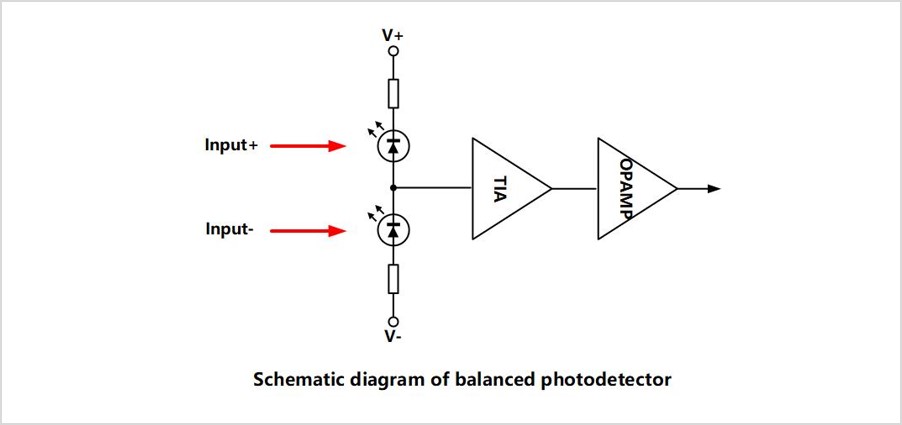
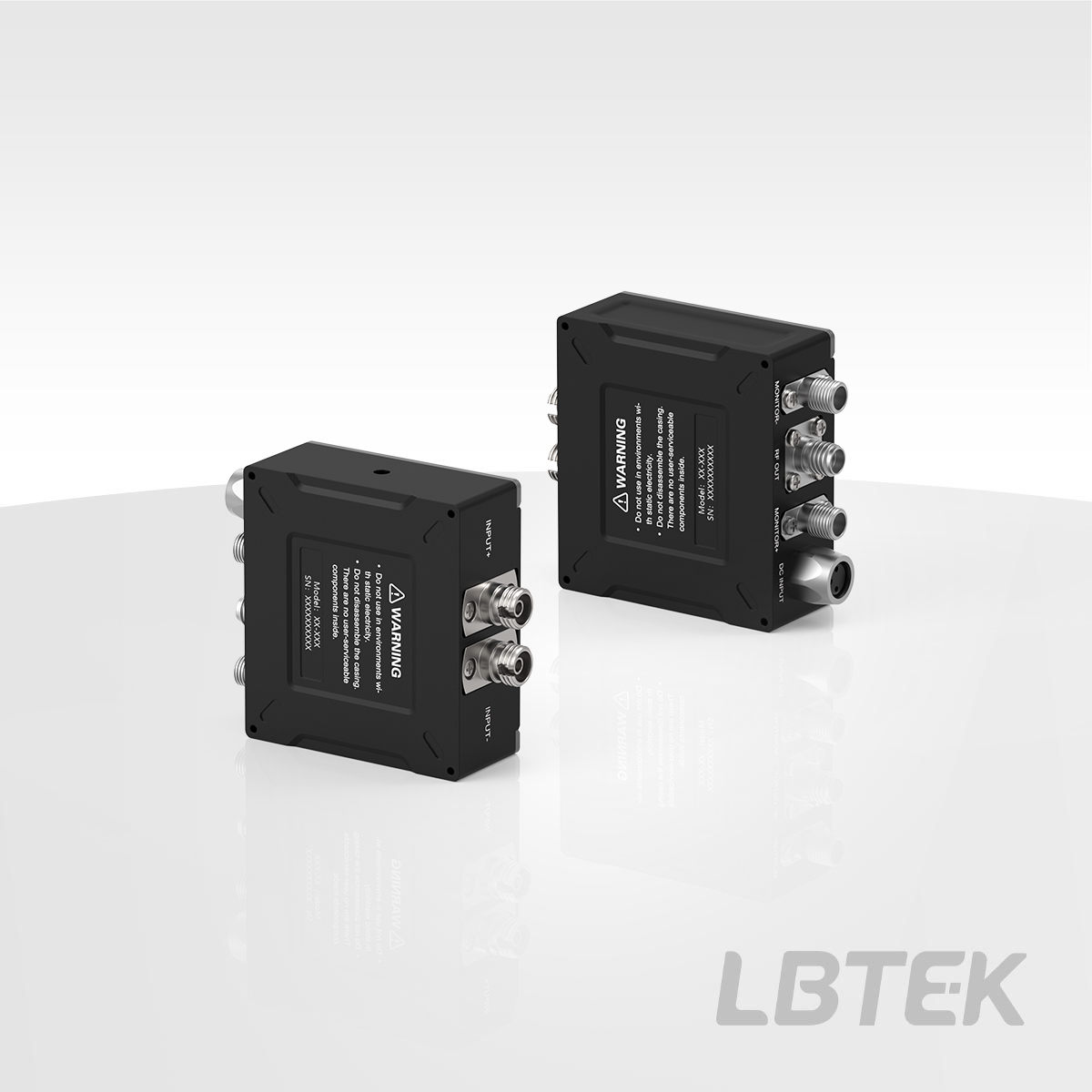
LBTEK's fiber-optic balanced photodetector series covers silicon and indium gallium arsenide types, providing FC/APC fiber input interfaces and featuring three SMA electrical connection output ports (RF OUT, MONITOR+, MONITOR-). It offers two output coupling methods: DC coupling and AC coupling, to adapt to different application scenarios. AC coupling blocks the continuous wave component (i.e., the unmodulated part) of the optical input signal. Therefore, if it is necessary to measure a relatively weak frequency-modulated signal that is under a strong continuous wave background signal, an AC-coupled detector can be selected. The detector housing has an M4 threaded mounting hole on the side, suitable for universal installation. Each balanced photodetector comes with a ±12V linear power supply.
Input and Output Interfaces
Product Model | Operating Wavelength | bandwidth | NEP (Noise Equivalent Power) | Output coupling method | Unit Price | Compare | Lead Time | ||
|---|---|---|---|---|---|---|---|---|---|
 | PDB100A-DC New | 320~1000 nm | DC~100 MHz | 12.03 pW/√Hz | DC coupling | $980.56 | today | Add Cart | |
| PDB100A-AC New | 320~1000 nm | 100 Hz~100 MHz | 12.03 pW/√Hz | AC coupling | $980.56 | today | Add Cart | |
| PDB200A-DC New | 320~1000 nm | DC~200 MHz | 22.86 pW/√Hz | DC coupling | $1,045.93 | 3 weeks | Add Cart | |
| PDB200A-AC New | 320~1000 nm | 100 Hz~200 MHz | 22.86 pW/√Hz | AC coupling | $1,045.93 | 3 weeks | Add Cart | |
| PDB400A-DC New | 320~1000 nm | DC~400 MHz | 9 pW/√Hz | DC coupling | $1,176.67 | 3 weeks | Add Cart | |
| PDB400A-AC New | 320~1000 nm | 100 Hz~400 MHz | 9 pW/√Hz | AC coupling | $1,176.67 | today | Add Cart | |
| PDB800A-AC New | 320~1000 nm | 30 kHz~800 MHz | 22 pW/√Hz | AC coupling | $1,699.64 | today | Add Cart | |
| PDB100C-DC New | 800~1700 nm | DC~100 MHz | 6.99 pW/√Hz | DC coupling | $980.56 | today | Add Cart | |
| PDB100C-AC New | 800~1700 nm | 100 Hz~100 MHz | 6.99 pW/√Hz | AC coupling | $980.56 | today | Add Cart | |
| PDB200C-DC New | 800~1700 nm | DC~200 MHz | 8.52 pW/√Hz | DC coupling | $1,045.93 | 3 weeks | Add Cart | |
| PDB400C-DC New | 800~1700 nm | DC~400 MHz | 4.5 pW/√Hz | DC coupling | $1,176.67 | today | Add Cart | |
| PDB200C-AC New | 800~1700 nm | 100 Hz~200 MHz | 8.52 pW/√Hz | AC coupling | $1,045.93 | 3 weeks | Add Cart | |
| PDB400C-AC New | 800~1700 nm | 100 Hz~400 MHz | 4.5 pW/√Hz | AC coupling | $1,176.67 | today | Add Cart | |
| PDB1000C-AC New | 800~1700 nm | 30 kHz~1000 MHz | 9 pW/√Hz | AC coupling | $1,699.64 | today | Add Cart | |
| PDB1600C-AC New | 800~1700 nm | 30 kHz~1600 MHz | 9.3 pW/√Hz | AC coupling | $1,765.01 | today | Add Cart |
 购物车图-FhY1KHwfiEUlCerYAmkHBXFgo7Gg.jpg "Fiber-optic balanced photodetector, adjustable gain")
- Operating Wavelength: 320-1000 nm; 800-1700 nm
- FC/APC Fiber Input
- 5 Adjustable Gain Levels
- With High-Speed Monitoring Output
LBTEK's fiber-optic balanced photodetector series covers both silicon and indium gallium arsenide types, with 5 adjustable gain levels to meet the needs of photodetection applications under different light intensity conditions. It provides an FC/APC fiber optic input interface and features 3 SMA electrical connection output ports (RF OUT, MONITOR+, MONITOR-). Two output coupling methods, DC coupling and AC coupling, are offered to adapt to different application scenarios. AC coupling blocks the continuous wave component (i.e., the unmodulated part) of the optical input signal. Therefore, if it is necessary to measure relatively weak modulated signals that are under a strong continuous wave background signal, an AC-coupled detector can be selected. The detector housing has an M4 threaded mounting hole on the side, suitable for universal installation. Each balanced photodetector comes with a ±12V linear power supply.
Input and Output Interfaces
Product Model | Operating Wavelength | Output coupling method | Unit Price | Compare | Lead Time | ||
|---|---|---|---|---|---|---|---|
| PDBA100A-DC New | 320~1000 nm | DC coupling | $1,438.15 | today | Add Cart | |
| PDBA100A-AC New | 320~1000 nm | AC coupling | $1,438.15 | today | Add Cart | |
| PDBA100C-DC New | 800~1700 nm | DC coupling | $1,568.89 | today | Add Cart | |
| PDBA100C-AC New | 800~1700 nm | AC coupling | $1,568.89 | today | Add Cart |
 购物车图-Fkw7ueIrUj0utyo3W8-t0nmDkmGy.jpg "Free-space balanced photodetector, fixed gain")
- Working wavelength: 190-1100 nm; 320-1000 nm; 800-1700 nm
- Free-space input
- Fixed gain
- With monitor output
LBTEK's free-space balanced photodetectors cover three types: UV-enhanced silicon, silicon, and indium gallium arsenide. They can directly receive free-space input optical signals,and feature three SMA electrical connection output ports (RF OUT, MONITOR+, MONITOR-). The detector housing has external SM1 threads and internal SM05 threads, along with 3×M4 threaded holes, facilitating installation onto mounting rods. Each detector comes with two SM1-8B adapters anda ±12 V linear power supply.
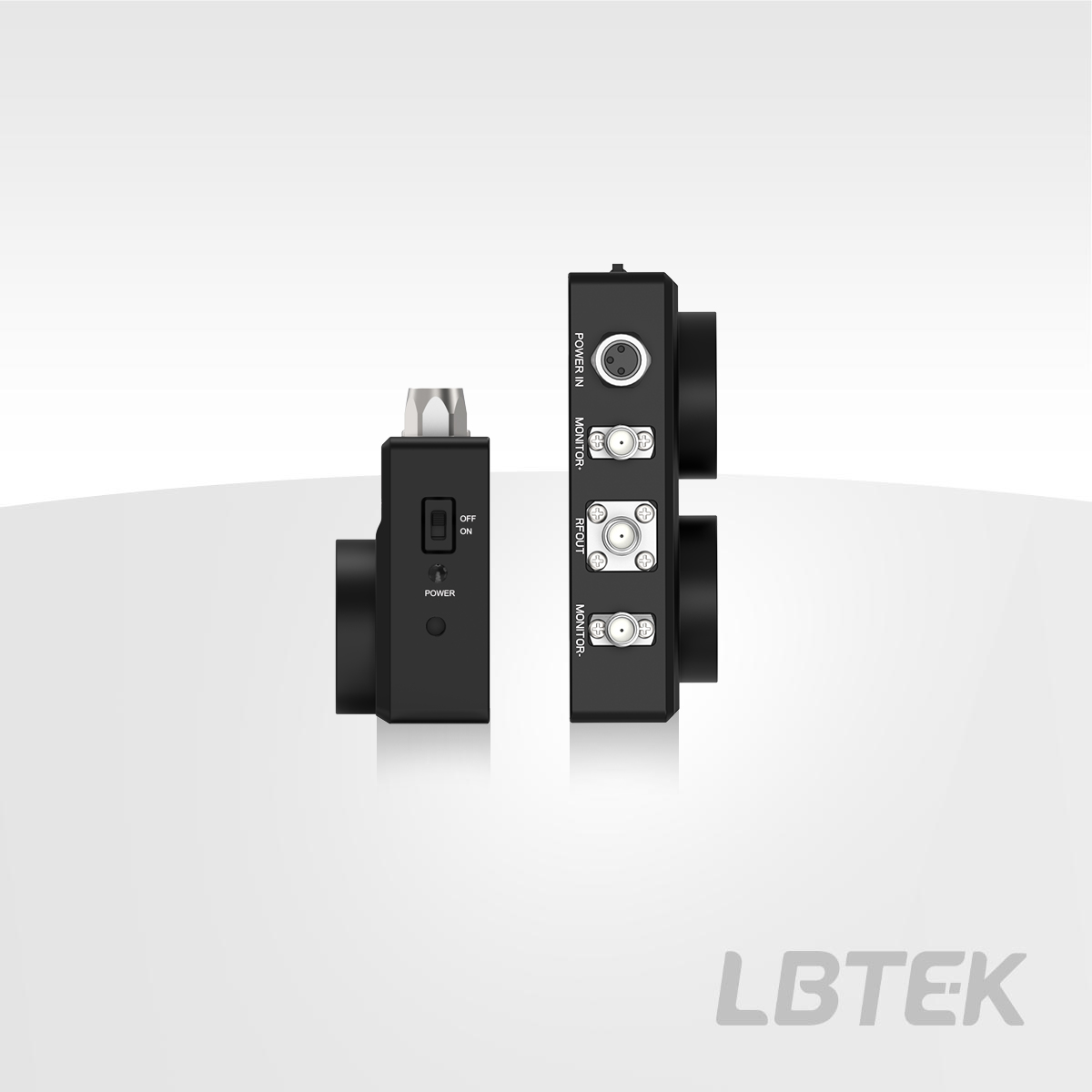
Diagram of the top and side surfaces of the detector
Product Model | Operating Wavelength | bandwidth | NEP (Noise Equivalent Power) | Output coupling method | Unit Price | Compare | Lead Time | ||
|---|---|---|---|---|---|---|---|---|---|
| PDBS1A2-DC New | 190~1100 nm | DC~1MHz | 3.6 pW/√Hz | DC coupling | $1,045.93 | 3 weeks | Add Cart | |
| PDBS1A-DC New | 320~1000 nm | DC~1MHz | 2.2 pW/√Hz | DC coupling | $980.56 | 3 weeks | Add Cart | |
| PDBS100A-DC New | 320~1000 nm | DC~100 MHz | 12 pW/√Hz | DC coupling | $1,176.67 | 3 weeks | Add Cart | |
| PDBS1C-DC New | 800~1700 nm | DC~1 MHz | 12 pW/√Hz | DC coupling | $1,699.64 | today | Add Cart | |
| PDBS100C-DC New | 800~1700 nm | DC~100 MHz | 6.5 pW/√Hz | DC coupling | $1,634.26 | 3 weeks | Add Cart |
 购物车图-FgCX9NaM7q1nM8gt_yDsenbcGj3j.jpg "Free-space balanced photodetector, adjustable gain")
- Operating Wavelength: 190~1100 nm; 320~1000 nm; 800~1700nm; 900~2600nm
- Free Space Input
- 6 Levels of Adjustable Gain
- With Monitoring Output
LBTEK's free-space balanced photodetectors cover four types: UV-enhanced silicon, silicon, InGaAs, and XInGaAs, with 6 adjustable gain levels to meet the requirements of photodetection applications under different light intensity conditions. They can directly receive free-space input optical signals,feature three SMA electrical output ports (RF OUT, MONITOR+, MONITOR-). The detector housing has SM1 external threads and SM05 internal threads, along with 3×M4 threaded holes for easy mounting onto posts. Each detector comes with two SM1-8B adapters anda ±12 V linear power supply.
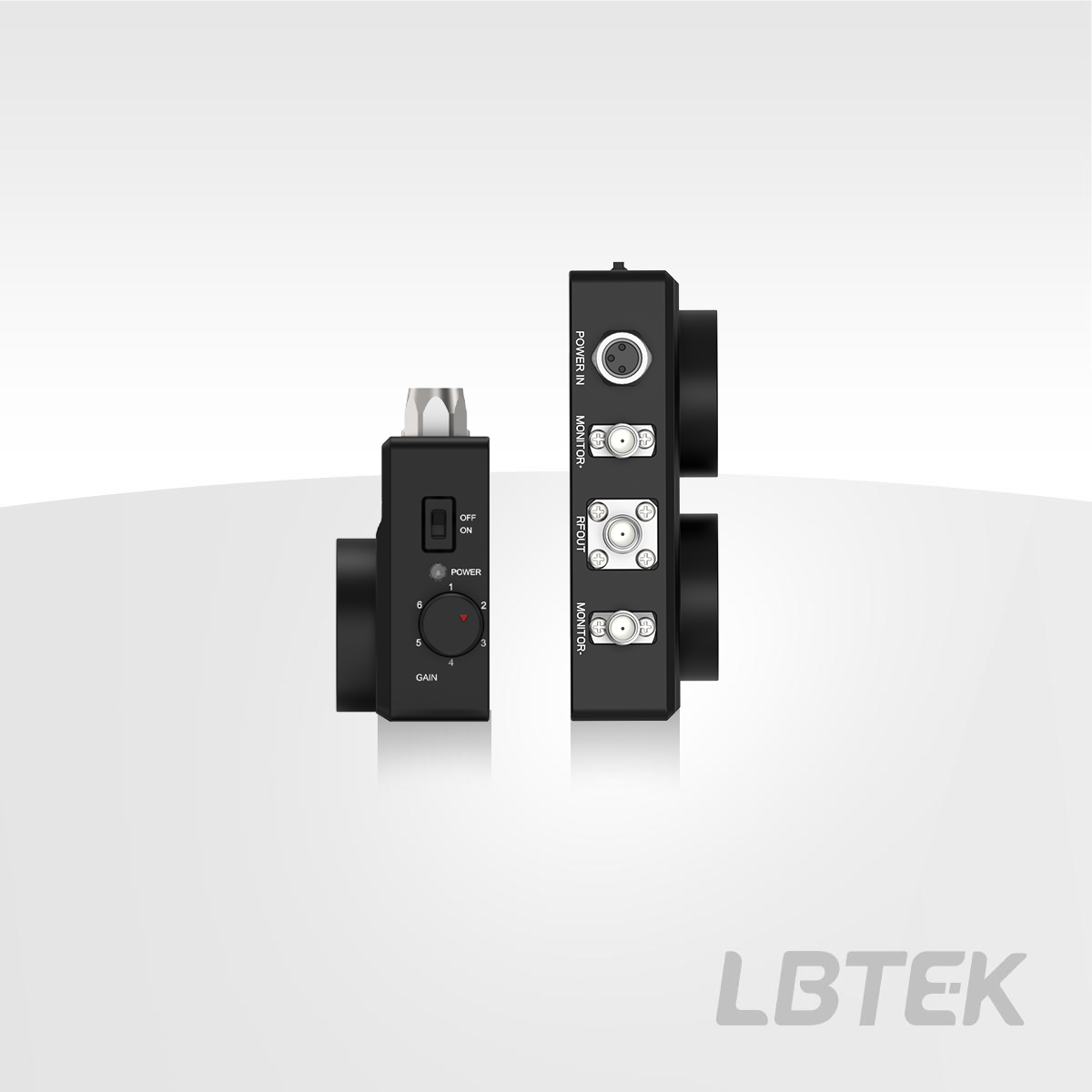
Diagram of the top and side surfaces of the detector
Product Model | Operating Wavelength | bandwidth | Output coupling method | Unit Price | Compare | Lead Time | ||
|---|---|---|---|---|---|---|---|---|
| PDBAS1A2-DC New | 190~1100 nm | DC~1MHz | DC coupling | $1,111.30 | 3 weeks | Add Cart | |
| PDBAS1A-DC New | 320~1000 nm | DC~1MHz | DC coupling | $1,045.93 | today | Add Cart | |
| PDBAS1C-DC New | 800~1700 nm | DC~1MHz | DC coupling | $1,765.01 | 3 weeks | Add Cart | |
| PDBAS1D-DC New | 900~2600 nm | DC~1MHz | DC coupling | $1,961.12 | 3 weeks | Add Cart |

- Operating Wavelength: 400-1100nm, 800-1700 nm
- Common Mode Rejection Ratio >25 dB
- Adjustable Gain Model Adjustment Range: 0~31dB
LBTEK Balanced Photodetectors are available in two wavelength ranges: 400-1100 nm and 800-1700 nm. They come in two models: fixed gain and adjustable gain. The adjustable gain model has a tuning range of 0~31 dB (software adjustable). Two input types are available: FC/APC fiber input and free-space input.
For the AC-coupled adjustable gain model, the typical low-frequency cutoff is around 30 kHz. For the AC-coupled fixed gain model with a bandwidth of 500 MHz or less, the low-frequency cutoff is around a few hundred Hz. For models with bandwidths above 500 MHz, the low-frequency cutoff is 30 kHz. For custom cutoff frequency requirements, please contact technical support for details.
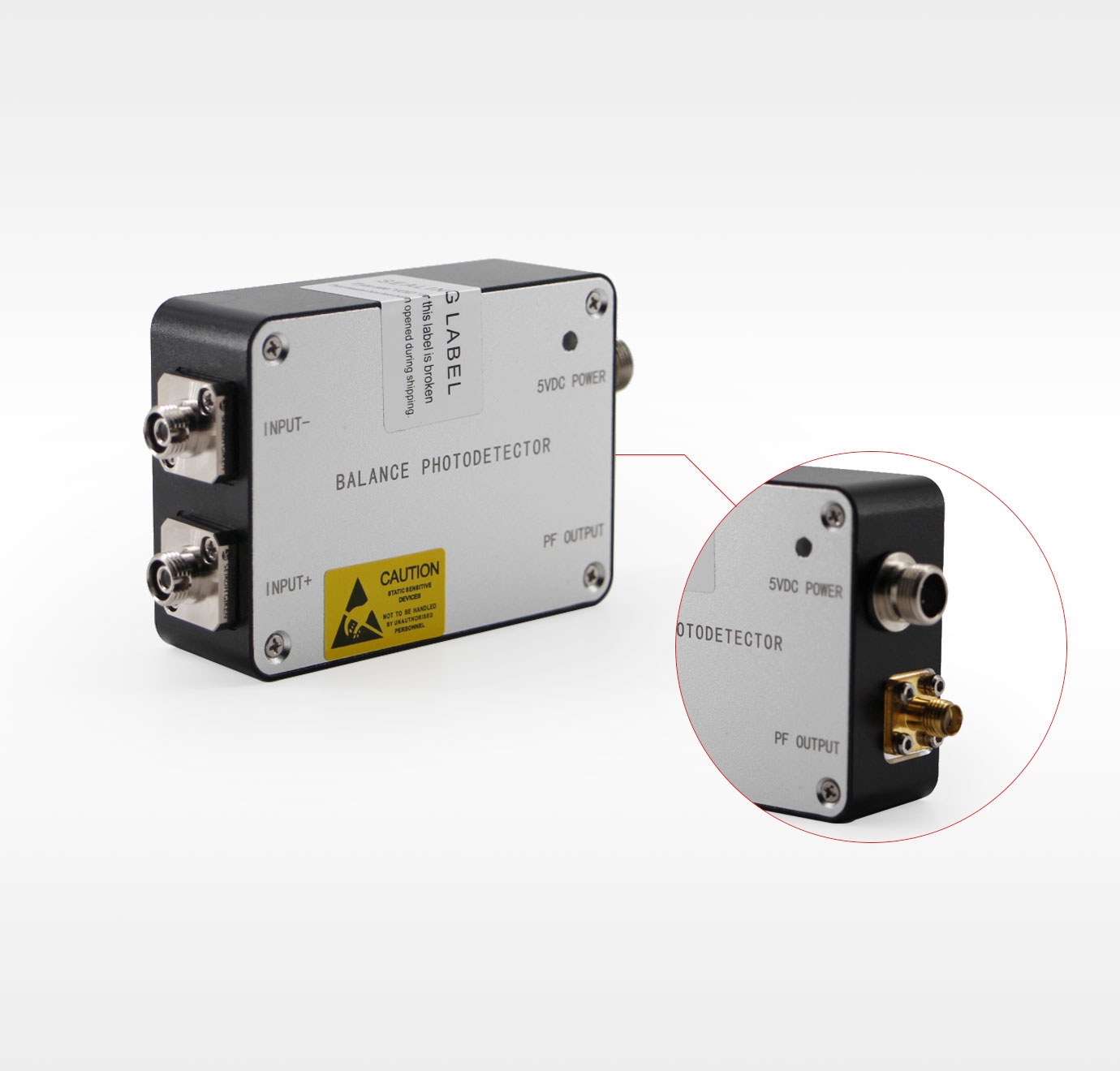
Product Model | Operating Wavelength | bandwidth | Output coupling method | Unit Price | Compare | Lead Time | ||
|---|---|---|---|---|---|---|---|---|
| PDB-500M-AB | 400 nm-1100 nm | 500 MHz | AC | $1,453.84 | today | Add Cart | |
| PDBS-100M-AB | 400 nm-1100 nm | 100 MHz | AC | $1,109.99 | today | Add Cart | |
| PDBS-1.6G-BC | 800 nm-1700 nm | 1.6 GHz | AC | $1,601.58 | today | Add Cart |

- Operating Wavelength: 320 nm-1000 nm
- FC/APC Fiber Input
- Common Mode Rejection Ratio ≥30 dB
- Ultra-Low Noise
The LBTEK Si Ultra-low Noise Miniature Balanced Photodetector operates within a wavelength range of 320 nm to 1000 nm, with FC/APC fiber optic input, offering five selectable bandwidth options: 75 MHz, 100 MHz, 200 MHz, 400 MHz, and 500 MHz. Note: The standard product's output coupling method defaults to AC-coupled output. DC-coupled output is available upon request for customization.

Product Model | Operating Wavelength | NEP (Noise Equivalent Power) | bandwidth | Output coupling method | Unit Price | Compare | Lead Time | ||
|---|---|---|---|---|---|---|---|---|---|
| UPDB-75M-A | 320 ~ 1000 nm | 9 pW/√Hz | 75 MHz | AC | $1,043.31 | today | Add Cart |

Email: support@lbtek.com
Tel: 400-060-6986 (Mon-Sun 9:00-18:00)
 WeChat
 TikTok
 Zhihu
Zhihu Bilibili