%20--%3e%3csvg%20version='1.1'%20id='图层_1'%20xmlns='http://www.w3.org/2000/svg'%20xmlns:xlink='http://www.w3.org/1999/xlink'%20x='0px'%20y='0px'%20viewBox='0%200%20289.2%2071.5'%20style='enable-background:new%200%200%20289.2%2071.5;'%20xml:space='preserve'%3e%3cstyle%20type='text/css'%3e%20.st0{fill-rule:evenodd;clip-rule:evenodd;fill:%23B81C22;}%20.st1{fill:%23B81C22;}%20%3c/style%3e%3cg%3e%3cpath%20class='st0'%20d='M286.5,2.7c-0.2-0.5-0.7-1-1.6-1c-4.1,0-9.1,0-9.1,0c-2.9,0-6.1,3.1-6.1,3.1c0,0-13,14.6-21.8,23.4l-1,1%20l2.3-18.7c0.3-2.2-0.4-4.5-1.9-6.1c-1.5-1.7-3.6-2.7-5.9-2.7h-2.8c-1,0-1.8,0.7-1.9,1.7l-8.3,65.1c-0.1,0.5,0.1,1.1,0.5,1.5%20c0.4,0.4,0.9,0.7,1.4,0.7h3c4.8,0,8.8-3.5,9.4-8.3l1.8-14.2l6.6-6.6l0.3,0.5c3.5,5.3,16.2,24.4,16.9,25.6c0.4,0.4,1.9,3.1,6.2,3.1%20l8.6-0.1c0.8,0,1.4-0.4,1.7-1.1c0.3-0.7,0.3-1.4-0.1-2.1l-22.1-32.5c-1.2-1.7-1-4,0.5-5.5l23.1-24.8C286.7,3.9,286.7,3.2,286.5,2.7%20'/%3e%3cpath%20class='st0'%20d='M174.4,14.3C174.4,14.3,174.4,14.2,174.4,14.3L176,4c0.1-0.7-0.1-1.3-0.5-1.8c-0.4-0.5-1.1-0.8-1.8-0.8h-50.4%20c-1.5,0-3,1.2-3.2,2.7l-1.3,10.2h21.1l-7.1,56.2l13.1,0c0.1,0,0.1-0.1,0.1-0.1l7.4-56.2H174.4z'/%3e%3cpath%20class='st0'%20d='M13,1.4h-2.6c-0.9,0-1.8,0.8-1.9,1.7L0.8,64.4c-0.2,1.6,0.2,3,1.2,4.1c1,1.1,2.5,1.8,4.1,1.8h39.7%20c1.3,0,2.4-1,2.6-2.3c0.4-3-0.4-5.8-2.3-7.9c-1.9-2.1-4.6-3.3-7.6-3.3H23.7c-1.6,0-3.1-0.7-4.1-1.9c-1.1-1.2-1.5-2.8-1.3-4.3%20L23,12.7c0.4-3-0.4-5.8-2.3-8C18.8,2.6,16.1,1.4,13,1.4'/%3e%3cpath%20class='st0'%20d='M223,40.3c0.3,0,0.5-0.2,0.6-0.5l1.1-8.4c0-0.1,0-0.2-0.1-0.3c-0.1-0.1-0.1-0.1-0.3-0.1h-8%20c-0.3,0-0.5,0.2-0.6,0.5l-1.1,8.4c0,0.1,0,0.2,0.1,0.3c0.1,0.1,0.1,0.1,0.3,0.1H223z'/%3e%3cpath%20class='st0'%20d='M229,1.4h-35.4c-6.9,0-13.1,5.5-14,12.3L174,58c-0.4,3.3,0.5,6.4,2.6,8.7c2,2.3,4.9,3.6,8.2,3.6h35.8l0.5-5%20c0.2-2.1-0.5-4.1-1.9-5.7c-1.4-1.5-3.4-2.4-5.5-2.4l-17.2,0c-2.2,0-4.2-0.9-5.6-2.5c-1.4-1.6-2-3.7-1.8-6c0.6-4.5,4.7-8.3,9.3-8.3%20l11.5,0c0.3,0,0.6-0.2,0.6-0.5l1-8.3c0-0.1,0-0.2-0.1-0.3c-0.1-0.1-0.2-0.1-0.3-0.1l-11.6,0h0c-3.2,0-5.5-1.3-6.6-3.6%20c-1.3-2.8-1.1-6,0.6-8.6c1.8-2.8,4.8-4.5,8-4.5h18.1c4.5,0,8.3-3.3,8.8-7.8L229,1.4z'/%3e%3cpath%20class='st1'%20d='M112.3,9.9c-1.5-2.9-3.8-5.1-7-6.5c-3.1-1.4-7.4-2.1-12.8-2.1l-25.4,0h0c-2.5,0-4.8,2-5.1,4.5l-7.3,57.9%20c-0.2,1.8,0.3,3.4,1.4,4.7c1.1,1.3,2.7,1.9,4.5,1.9h23.5c4.5,0,8.4-0.4,11.6-1.2c3.2-0.8,6-1.9,8.3-3.5c2.3-1.5,4.4-3.8,6.2-6.6%20c1.8-2.8,2.9-5.9,3.3-9.1c0.5-4.1-0.2-7.6-2.2-10.6c-1.6-2.4-3.9-4.3-7-5.6l-0.9-0.4l0.9-0.5c2.5-1.4,4.6-3.2,6.1-5.3%20c2-2.7,3.2-5.5,3.6-8.5C114.4,15.9,113.8,12.8,112.3,9.9%20M101.5,21.7c-0.5,4-4,7.1-7.9,7.2H78.4l-0.2,1.3c-0.3,2.7,0.4,5.2,2.1,7.1%20c1.7,1.9,4.1,2.9,6.8,2.9h3.4c0.6,0,1.2,0.1,1.7,0.2c0.3,0,0.6,0.1,0.8,0.2l0,0.5l0.1-0.5c3.5,1.1,5.5,4.4,5.1,8.2%20c-0.6,4.6-4.8,8.4-9.5,8.4H71.4c-0.6,0-1.2-0.3-1.6-0.7c-0.4-0.5-0.6-1-0.5-1.6l4.9-38.6c0.1-1.1,1-1.8,2.1-1.8h0%20c15.3,0,18.2,0,18.8,0l0,0c1.9,0,3.7,0.8,4.9,2.1C101.2,17.9,101.7,19.7,101.5,21.7'/%3e%3c/g%3e%3c/svg%3e)
After decades of development, China's photovoltaic industry has established a complete and well-developed industrial chain. It leads the world in terms of manufacturing scale, industrial technology level, market application expansion, and industrial system construction. Currently, China's capacity and output in each segment account for over 80% of the global total, solidifying its dominant position in the global market.
BC Cell Etching
BC cells, short for Back Contact, are a general term for all types of back-contact crystalline silicon solar cells. They primarily include IBC, HBC, PBC, ABC, HPBC, and others, with the foundational type being the IBC cell (interdigitated back-contact cell).
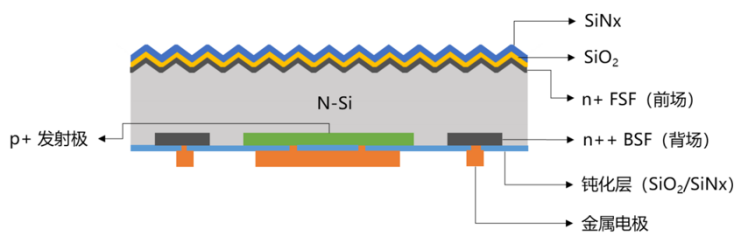
BC cell structure (From Internet)
· The purpose of the first laser step is to remove part of the initially doped thin film layer, delineating the N/P regions.
· The second laser step is performed after creating the thin film layer of the other doping type, removing the contact areas between the N-type and P-type doped regions to achieve P/N isolation. This establishes independent electron/hole transport channels on the back side of the cell.
· The third laser step removes part of the SiNx layer to ensure direct contact between the metal paste and silicon, facilitating the efficient extraction of charge carriers.
In the production process of BC cells, multiple laser steps are used to remove specific materials. In this laser process, end customers demand extremely high speeds and exceptional uniformity.
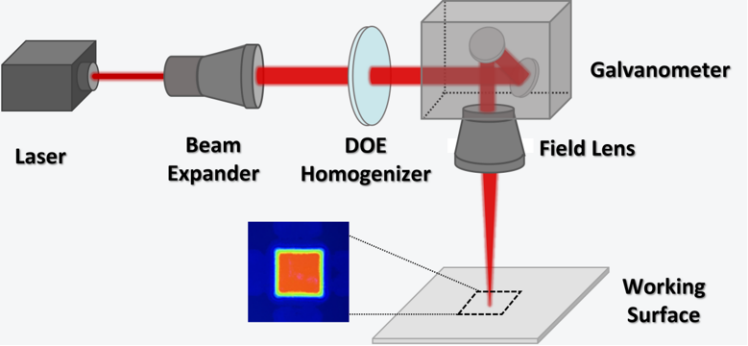
BC Cell Etching Solution
To achieve this goal, LBTEK has introduced a BC cell etching solution designed to address key challenges in the patterning or metallization processes.|
Key issues |
Important matters |
Measures |
|
The tunneling layer is only 1–2 nm thick. If the tunneling layer is damaged, it will lead to a degradation of the passivation effect. Selective absorption occurs at longer wavelengths |
Shaping a single-mode Gaussian beam spot into a large, square-shaped homogenized beam spot (~200 μm) significantly improves processing efficiency compared to a Gaussian spot. The size of the homogenized beam spot is customizable, offering high uniformity, sharp edges, and excellent processing results |
|
|
P/N junction isolation |
Separate the P-type polysilicon from the N-type polysilicon. If the separation is incomplete and a short circuit occurs at the bottom, it will lead to recombination losses |
|
|
The openings for the N/P regions must be aligned with the corresponding diffusion areas. Additionally, since the passivation layer of BC cells is relatively thick, precise opening depth and positioning are essential to ensure effective contact with the metal paste. Wider line widths allow for greater current flow |
LBTEK provides core components for BC cell etching solutions, including zoom beam expanders, five-axis beam expander mounting and adjustment stages, homogenizing DOEs, six-axis optical alignment stages, long-focal-length large-format quartz field lenses, laser-line mirrors, and laser-line mirror mounts. Additionally, LBTEK offers comprehensive end-to-end service support, from conceptual design to practical implementation.
TOPCon cell laser selective thinning
Currently, TOPCon cells represent the mainstream high-efficiency technology in the photovoltaic industry, with mass production efficiency reaching approximately 25.3%. However, to approach the theoretical limits of 26% and beyond, we must address the core sources of efficiency loss. The most significant efficiency gap in TOPCon cells currently lies at the front surface. Unlike the excellent passivated contact structure at the rear side, the front surface still involves direct contact between the metal and the silicon substrate, leading to severe carrier recombination. Additionally, the polysilicon layer at the front surface causes strong parasitic optical absorption, resulting in substantial loss of photogenerated current.
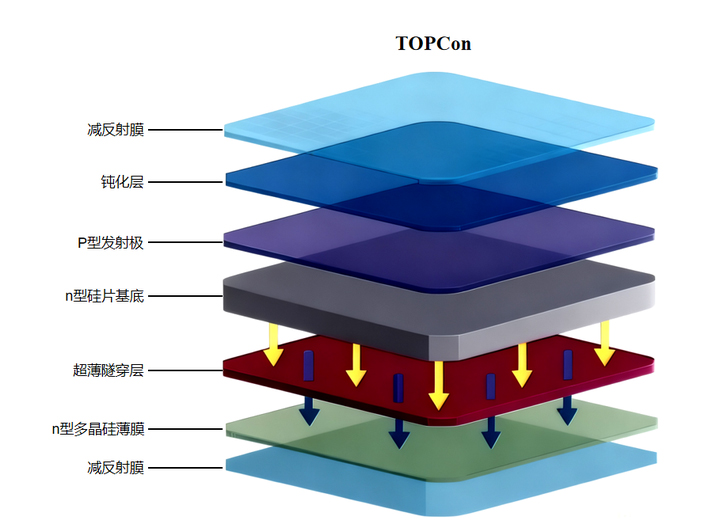
TOPCon cells
Ultimate Solution: A localized SiO₂ + Poly layer passivated contact structure is also fabricated on the front surface of the cell, known as double-sided Poly or selective emitter technology. This fundamentally reduces front surface recombination and resistive losses.In the existing single-sided Poly-Si TOPCon cell structure (as shown in the figure below), the front metal electrodes still make direct contact with the silicon substrate, leading to carrier recombination. In contrast, in the double-sided Poly-Si TOPCon cell structure, the metal electrodes do not come into direct contact with the silicon substrate, significantly reducing recombination and thereby improving cell efficiency.
Challenge: Full-area coverage of the Poly layer would lead to severe optical losses. Therefore, the Poly layer must be locally and selectively prepared only under the electrodes. This imposes extremely high demands on the precision and feasibility of the process.
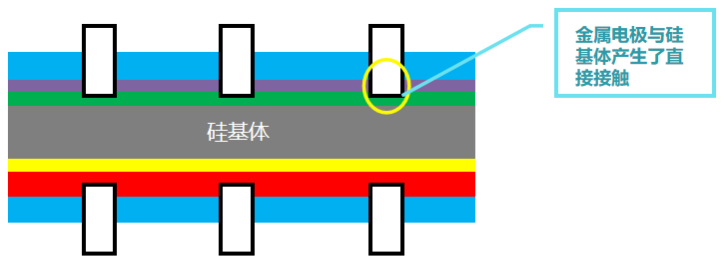
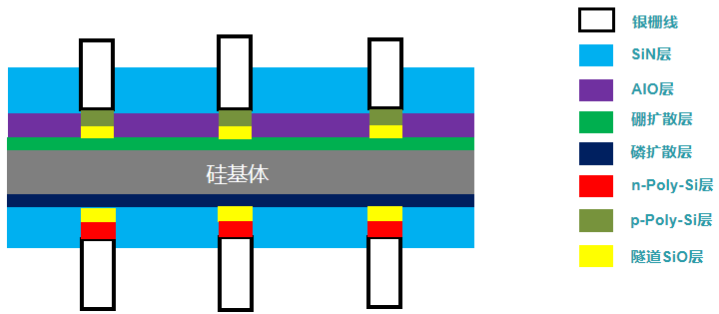
Single-sided and Double-sided TOPCon Cell Structures (From Internet)
In response to the industry pain points mentioned above, LBTEK has proposed an innovative laser-selective oxidation and thinning solution. This is a three-step patterning process.
· Laser Oxidation: Using our meticulously optimized 355nm nanosecond ultraviolet laser system, precise scanning is performed directly under the gridline electrodes on the Poly-Si layer of the TOPCon cell. By precisely controlling laser power (e.g., 3 W) and scanning speed (e.g., 400 mm/s), an ultra-thin (1–4 nm) silicon oxide mask layer is induced in the scanned areas.
· Chemical Etching: The silicon wafer is immersed in an etching solution such as KOH. The laser-oxidized areas are protected, while the unoxidized Poly-Si regions are completely etched away.
· Structure Formation: Ultimately, only finger-like Poly-Si structures are retained under the metal gridlines, achieving the ideal state of "presence where needed and absence where not needed." This is referred to as "selective thinning."
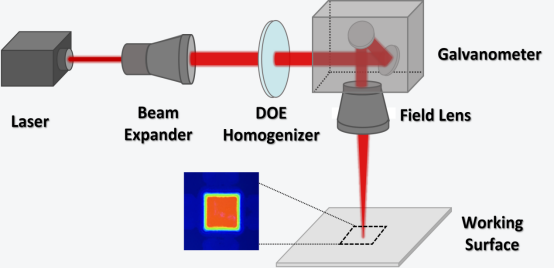
TOPCon cell laser selective thinning solution
|
Key issues |
Important matters |
Measures |
|
Scanning Area |
The laser acts on the blank areas between the gridlines, which are elongated rectangles. |
Issues with Gaussian beam thinning: It cannot uniformly thin localized areas, easily penetrates the Poly layer, and operates at a slow thinning speed. Advantages of LBTEK’s homogenized beam thinning solution: It can uniformly thin localized areas of the Poly layer, features a large beam spot size, and achieves high thinning speeds. |
|
Laser Wavelength and Energy |
The silicon oxide layer (1–2 nm) and the polysilicon layer (1–200 nm) are extremely thin and must not be completely removed. Laser energy control must be handled with great care. Ultraviolet pulses have high energy, making it difficult to control processing effects, while infrared absorption is relatively low, requiring higher power levels. |
|
|
Processing Efficiency |
When switching between grid-enclosed squares, the galvanometer needs to jump, resulting in low processing efficiency. |
LBTEK provides core components for TOPCon cell laser selective thinning, including zoom beam expanders, five-axis beam expander mounting and adjustment stages, homogenizing DOEs, six-axis optical alignment stages, long-focal-length large-format quartz field lenses, laser-line mirrors, and laser-line mirror mounts. Additionally, LBTEK offers comprehensive end-to-end service support, from conceptual design to practical implementation.
Perovskite cell laser equipment scribing
The pain points in the perovskite cell industry are poor stability leading to short lifespan and low efficiency in large-area fabrication. Currently, to address the issue of low efficiency in large-area production, laser processing is employed to achieve large-area cell segmentation and series connection. Perovskite cells typically require four laser processing steps, which demand high precision. Laser processing is involved throughout the entire perovskite cell fabrication process, primarily for scribing (P1-P3) and edge isolation (P4). During the scribing steps P1-P3, the laser mainly serves a cutting function, rapidly heating the material surface to vaporization to create grooves, thereby blocking electrical conduction and enabling cell segmentation and series connection. The interconnected sub-cell structure increases the output voltage of the module, reduces the output current, and minimizes resistive losses from series resistance within the sub-cells and external circuit resistance. Additionally, by connecting sub-cells in series, performance variations across the module caused by inhomogeneities in the perovskite material can be mitigated, reducing their overall impact on module performance. Edge isolation primarily ensures insulation at the cell boundaries. The laser scribing of multi-layered thin-film solar cells requires strong material selectivity, meaning it must not affect any non-target layers. Gaussian beams, when focused, exhibit uneven energy distribution, with 86.5% of the energy concentrated in the central region and only 13.5% in the remaining areas. A square flat-top beam can overcome this limitation, and its sufficient beam power enables smooth and precise scribing through simple contact. To address the laser processing requirements for perovskite thin-film cells and improve processing efficiency, parallel scribing technology is adopted, allowing multiple optical paths to perform synchronous scribing.
Laser processing is involved throughout the entire perovskite solar cell manufacturing process, primarily for scribing (P1-P3) and edge isolation (P4). The outermost area from the P1 to P3 scribes is non-power-generating, commonly referred to as the "dead zone" (the region that forms the series-connected structure). The larger the width of the dead zone, the greater the proportion of ineffective area within the cell, and consequently, the lower the efficiency of the sub-cells. Therefore, a key technical objective in the laser scribing process for perovskite photovoltaic cells is to minimize the dead zone as much as possible.
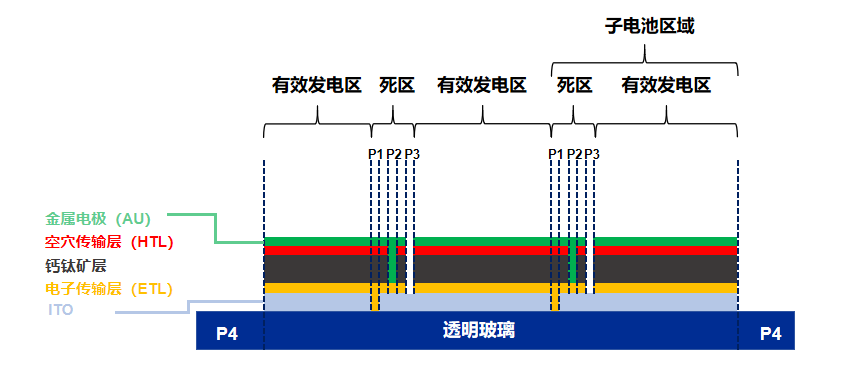
Perovskite Cell Structure (From Internet)
Apart from dead zone control, the quality of the laser process significantly impacts the optoelectronic performance of the cell. Laser etching depth requirements are stringent. On the basis of ensuring complete layer removal, it is essential to avoid the formation of craters and thermal-affected zones while maintaining good line uniformity.
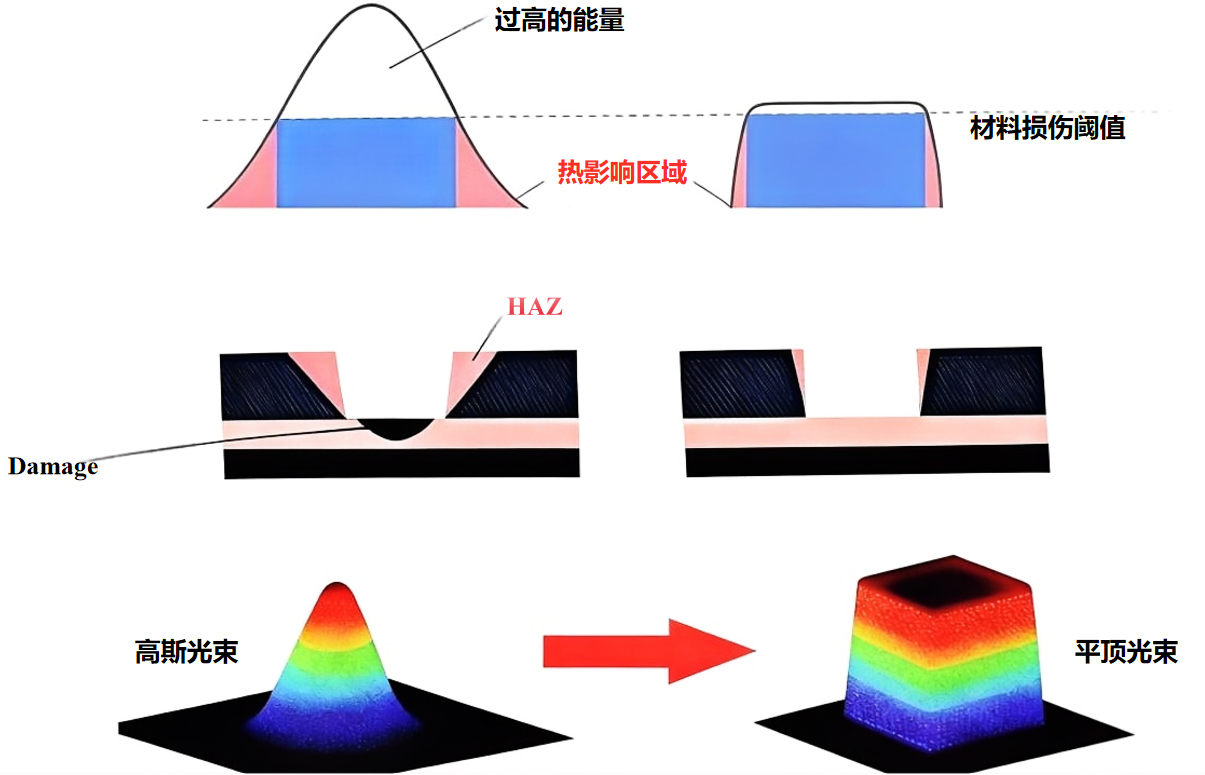
Laser Process Effects (From Internet)
LBTEK’s polarization grating beam splitting and PBS beam splitting solutions can both improve scribing efficiency. They can also be combined with homogenizing DOEs to shape Gaussian beams into flat-top beams, thereby reducing thermal damage at the edges of the scribed lines.
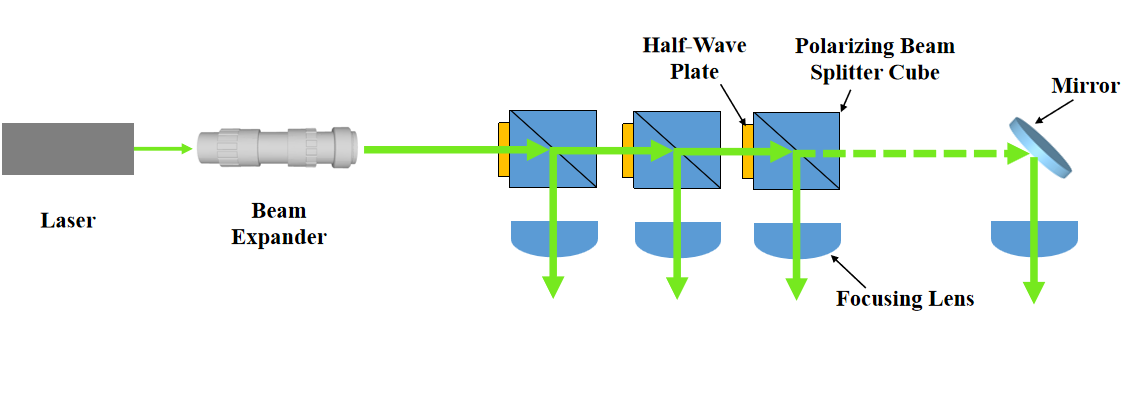
Perovskite Cell PBS Beam Splitting Solution
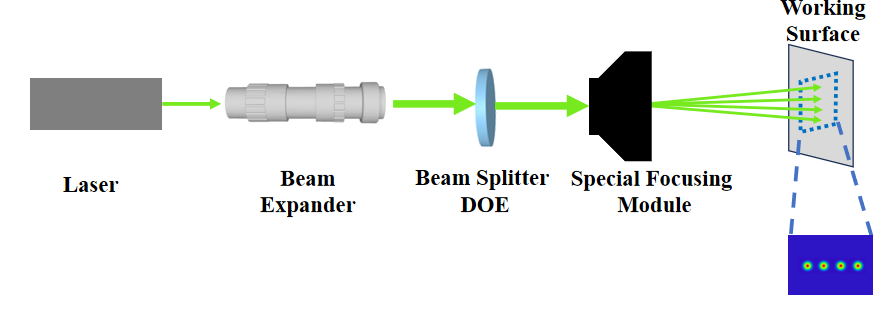
Perovskite Cell Polarization Grating Beam Splitting Solution
|
Key issues |
Important matters |
Measures |
|
Breakthrough in production capacity for large-size cell processing |
Single-point scribing efficiency is low |
By using beam splitting methods such as 1×12 or 1×24, the process can be extended to multiple channels for parallel processing, resulting in significant cost savings, efficiency improvements, and a breakthrough in production capacity |
|
Improving luminous efficiency |
In perovskite solar cells, there is a power-generating dead zone between the outer side of the P1 scribe and the outer side of the P3 scribe. The area of this dead zone is directly related to the line width. Reducing the dead zone area and increasing the effective light-absorbing region can enhance luminous efficiency |
By controlling the focal length of the focusing lens and the size of the incident beam spot, the diffraction limit is reduced, thereby decreasing the scribing line width |
|
Issue of thermal damage during processing |
When a Gaussian beam is focused, the energy distribution of the spot is not uniform. The central region contains 86.5% of the total energy, while the remaining areas account for only 13.5% of the total energy. This results in the formation of craters and heat-affected zones during processing |
Beam shaping technology is employed to transform the Gaussian beam spot into a flat-top beam spot. On one hand, this reduces thermal damage at the edges of the scribed lines; on the other hand, it ensures better flatness at the bottom of the scribed lines |

Email: support@lbtek.com
Tel: 400-060-6986 (Mon-Sun 9:00-18:00)
 WeChat
 TikTok
 Zhihu
Zhihu Bilibili